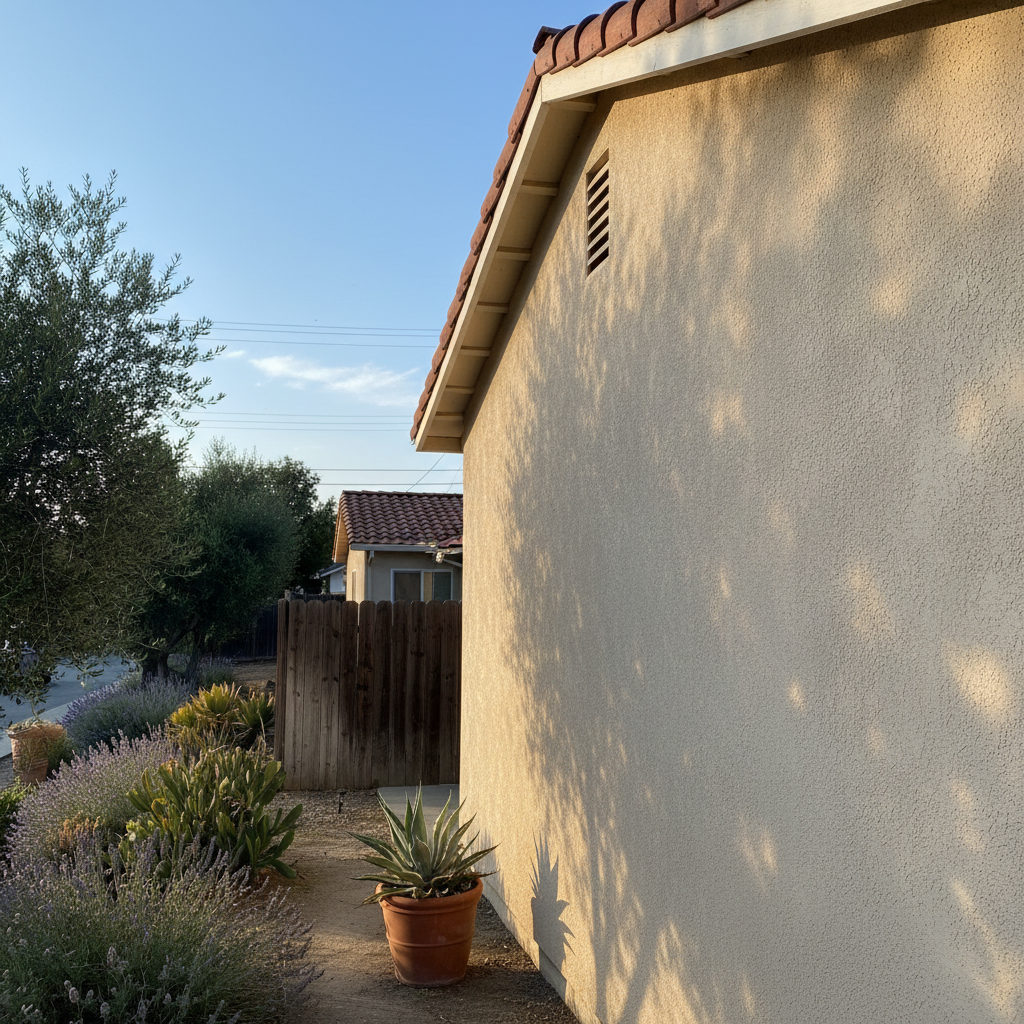
You've invested in repairing your stucco, and that's smart. But the job isn't truly done once the patch dries. Stucco, like anything else on your home, needs a bit of ongoing attention to really last. Especially here in San Jose, where we get those hot, dry summers and then some surprisingly wet winters, your stucco is working hard.
Extending the Life of Your Stucco Repair
So, you've fixed a crack or a larger section. How do you make sure that repair, and the rest of your stucco, stands the test of time? It mostly comes down to protecting it from moisture and impact. Water is stucco's biggest enemy, plain and simple. Make sure your gutters are clean and draining away from the house. If water is constantly splashing up from the ground onto the lower parts of your walls, you're asking for trouble. Consider adding a splash block or making sure your landscaping slopes away properly.
Another big one is paint. A good quality, breathable exterior paint acts like a raincoat for your stucco. It seals the surface, preventing water from penetrating, but still allows any trapped moisture to escape. Don't cheap out on paint; it's a protective layer. If your stucco isn't painted, consider a good quality elastomeric coating. It's flexible, so it can handle the minor expansions and contractions that happen with temperature changes.
Also, keep an eye on anything that attaches to your stucco — light fixtures, hose bibs, electrical boxes. Make sure they're properly sealed with caulk. If that caulk dries out and cracks, water's got an open invitation to get behind your stucco, and that's where real problems start.
Regular Stucco Maintenance: What to Look For
This isn't rocket science, but it does take a bit of observation. Walk around your house a few times a year. What do you see?
- Look for cracks: Small hairline cracks are often just cosmetic, but keep an eye on them. If they start to widen, lengthen, or branch out, they might be letting water in.
- Check for discoloration: Dark streaks, especially under windows or near downspouts, are usually a sign of water intrusion or prolonged dampness. Algae or mildew growth is another red flag.
- Inspect for efflorescence: That white, powdery substance? That's salts leaching out of the stucco as water evaporates. It means water's getting in and then drying out, leaving mineral deposits behind.
- Tap it: Gently tap on different areas of your stucco with a rubber mallet or your knuckles. If it sounds hollow or feels soft, that could indicate delamination (stucco separating from the wall) or moisture damage underneath.
- Check your caulk: As I mentioned, caulk around penetrations and trim pieces dries out. Look for cracks, gaps, or areas where it's pulling away.
Cleaning your stucco can also be part of regular maintenance. A gentle wash with a soft brush and mild detergent can remove dirt, dust, and superficial mildew. Just don't use a high-pressure washer; it can damage the stucco surface and force water into places it shouldn't be.
Warning Signs You Can't Ignore
Some issues go beyond routine maintenance. If you see these, it's time to get a professional opinion:
- Large cracks: Anything wider than a credit card, or cracks that run diagonally from window or door corners, often indicate structural movement or significant substrate issues.
- Bulging or crumbling stucco: This is a clear sign of moisture damage or bond failure. The stucco isn't properly adhered anymore.
- Water stains inside your home: If you're seeing water stains on interior walls that align with exterior stucco, you've got a serious leak that needs immediate attention.
- Persistent mold or mildew: If it keeps coming back even after cleaning, it means there's a constant source of moisture.
- Stucco falling off: Obvious, right? But sometimes people try to patch it themselves when the underlying problem is much bigger.
When to Call San Jose Stucco Solutions
You can handle small hairline cracks with a good quality caulk or patching compound. You can clean your stucco. You can repaint. But when you see those bigger warning signs – the wide cracks, the bulging, the persistent moisture issues, or if you're just not sure what you're looking at – that's when you call us.
Don't wait until a small problem becomes a huge, expensive repair. I've seen too many homes in older neighborhoods like Willow Glen or Cambrian Park where a little crack was ignored for years, and by the time we got there, the wood sheathing underneath was completely rotted out. It's always cheaper to fix it early. We're here to give you an honest assessment and get your stucco back in top shape.