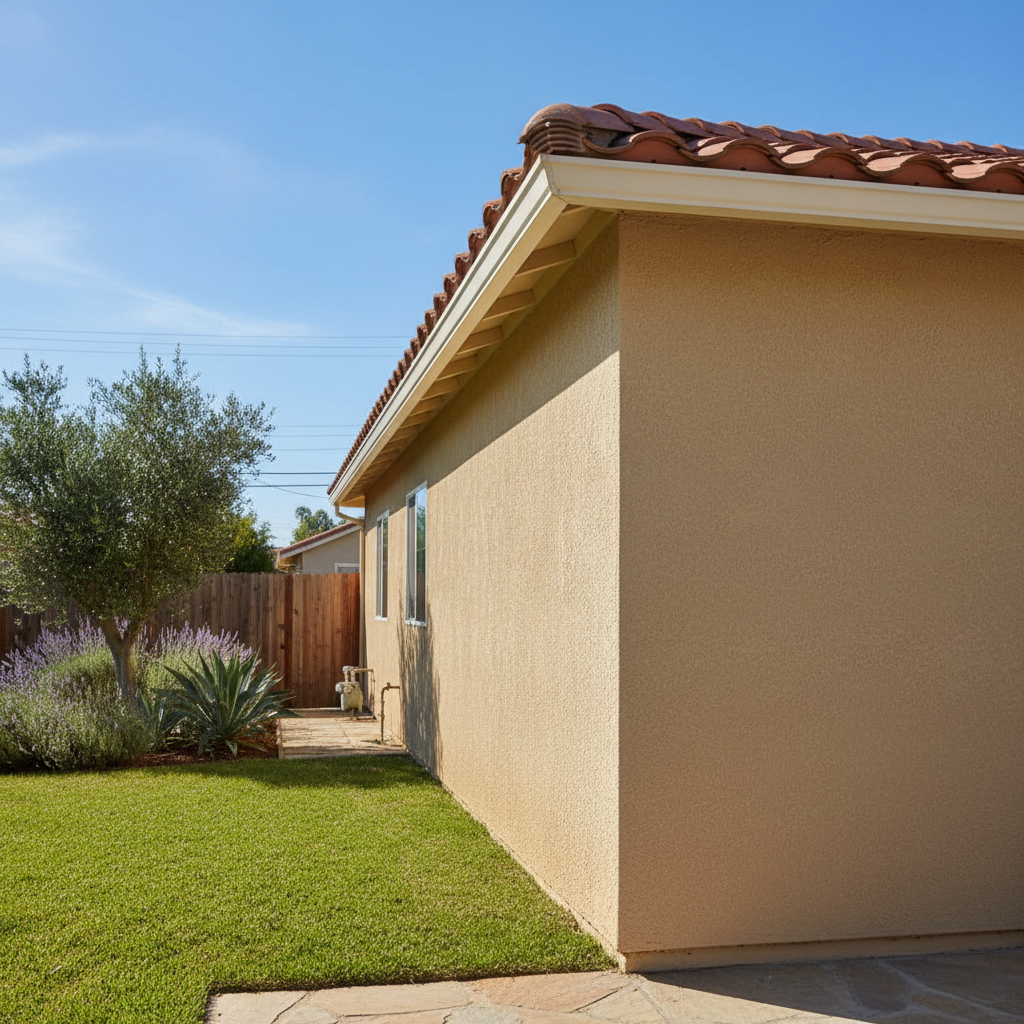
Alright, so you've got stucco on your home here in San Jose. Maybe it's brand new, or perhaps it's been around for decades. Either way, you want it to last, right? Good. Because while stucco is tough, it's not invincible. A little bit of smart maintenance really goes a long way, especially with our dry summers and those occasional heavy rains we get.
Making Your Stucco Last Longer
The biggest thing you can do to make your stucco last is to keep water from getting behind it. That's the number one enemy. When water gets trapped, it can cause all sorts of headaches – rot, mold, efflorescence, and eventually, structural damage. Usually, it's not the stucco itself that fails; it's what's happening behind it that causes problems.
Think about your gutters for a second. Are they clean? Are they actually directing water away from your foundation? If not, that overflow can run right down your stucco, soaking it unnecessarily and potentially finding its way into cracks. The same goes for your irrigation system. Don't let sprinklers constantly spray your stucco walls. Adjust them so they're watering your plants, not your house, okay?
Another big one is proper drainage around your foundation. If water pools up against your house after a rain, that's definitely a problem. Make sure your landscaping slopes away from the house, and that dirt levels aren't too high, covering the weep screed at the bottom of your stucco. That weep screed is there to let moisture out, and if it's buried, it simply can't do its job.
Easy Maintenance You Can Do Yourself
This isn't rocket science, folks. A lot of it is just common sense and paying attention. Here's what I recommend:
- Clean it: Every year or two, give your stucco a good cleaning. A soft brush and a mild detergent solution (like a little dish soap in water) works wonders. You can use a garden hose to rinse it down. Just don't blast it with a high-pressure washer close up – that can damage the finish and force water into places it shouldn't be.
- Inspect it: Walk around your house a couple of times a year. Look closely at the stucco. Are there any new cracks? Do you see dark streaks that might indicate water intrusion? Pay special attention around windows, doors, and where different materials meet. These are common spots for issues to start, after all.
- Trim back foliage: Keep shrubs and trees from growing directly against your stucco. They can trap moisture, rub against the surface, and create pathways for pests. Give your walls some breathing room.
- Seal cracks (small ones): If you see hairline cracks, you can often seal these yourself with an elastomeric caulk designed for stucco. It's a temporary fix for minor issues, but it's better than letting them sit.
Warning Signs of Trouble
You're looking for anything that seems